

How Commercial Vehicle Crashes Differ From Other Motor Vehicle Crashes in Michigan
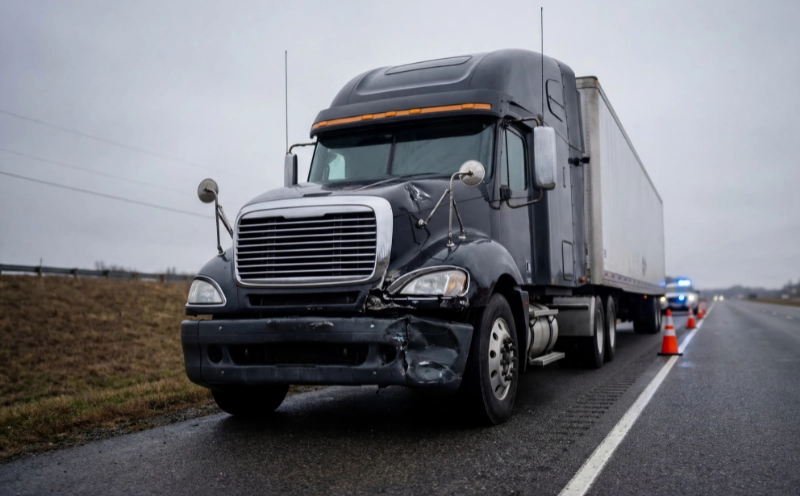
Commercial vehicle crashes in Michigan are often more complex than ordinary car accidents because they may involve multiple liable parties, higher insurance limits, company ownership issues, employer responsibility, additional evidence, and state or federal regulations that do not apply in the same way to typical passenger vehicle crashes.
When a delivery van, company truck, fleet vehicle, utility vehicle, or semi-truck is involved in a serious crash, the legal and insurance analysis often goes far beyond determining which driver made a mistake. In many cases, the company behind the vehicle, the vehicle owner, a maintenance provider, or another third party may also be responsible. That is why injured people should understand that a commercial vehicle crash is often not just a “bigger car accident.” It is a different kind of case entirely.
Why Commercial Vehicle Crashes Are Often More Complex
A standard car accident usually centers on a straightforward question: which driver was negligent, and what damages resulted? Commercial vehicle crashes often raise many additional questions, such as:
- Was the driver working at the time of the crash?
- Who owned the vehicle?
- Was the driver an employee or an independent contractor?
- Did the company properly maintain the vehicle?
- Were there delivery schedules, dispatch pressures, or company policies that contributed to the crash?
- Are there commercial insurance policies or umbrella policies that may apply?
- Do state or federal regulations affect the case?
These questions matter because the answers may significantly affect both who is legally responsible and what compensation may be available.
Commercial vehicles are also often heavier, harder to stop, and more dangerous in a collision than ordinary passenger vehicles. As a result, the injuries in these crashes are frequently severe, and the investigation must often begin immediately.
What Counts as a Commercial Vehicle?
The term “commercial vehicle” includes more than just semi-trucks. Depending on the circumstances, these crashes may involve:
- Semi-trucks and tractor-trailers
- Delivery vans
- Box trucks
- Service vehicles
- Utility vehicles
- Company-owned pickup trucks
- Construction vehicles
- Fleet cars used for business purposes
If the vehicle was being operated in connection with a business, delivery route, service call, or other commercial purpose, the case may involve issues that do not arise in an ordinary two-car crash.
That distinction is important because many injured people assume the case is only about the driver. In a commercial vehicle crash, that is often only part of the story.
Who Can Be Held Responsible in a Commercial Vehicle Crash?
One of the biggest differences between commercial vehicle crashes and ordinary car accidents is the possibility of multiple responsible parties.
In a typical crash, the at-fault driver may be the central defendant. In a commercial vehicle case, liability may extend beyond the driver to other individuals or businesses whose actions contributed to the crash.
Potentially responsible parties may include:
- The commercial vehicle driver
- The employer or company the driver was working for
- The owner of the vehicle
- The owner of a trailer or attached equipment
- A maintenance or repair company
- A cargo-loading company
- A contractor or subcontractor involved in the transportation chain
- Another negligent motorist whose actions contributed to the collision
In some cases, an employer may be legally responsible for a driver’s conduct while the driver was acting within the scope of employment. In other cases, the company may be independently responsible because of negligent hiring, poor supervision, inadequate training, unsafe scheduling practices, or failure to maintain the vehicle.
For a closer look at how this analysis works in trucking cases, read Who Can Be Held Liable in a Michigan Semi-Truck Accident?.
Why Insurance Issues Are Often Different
Insurance is another major reason commercial vehicle crashes are often more complicated.
In an ordinary car accident, the available insurance may be limited to the at-fault driver’s personal auto policy and any applicable no-fault benefits. In a commercial vehicle case, there may be:
- A company auto policy
- A commercial liability policy
- Additional insured coverage
- Umbrella or excess insurance coverage
- Coverage connected to another business entity involved in the crash
That matters because serious crashes often cause losses that go far beyond immediate medical bills. A person may face ongoing treatment, rehabilitation, long-term disability, lost wages, reduced earning capacity, or permanent impairment. In cases involving severe injuries, identifying every potentially responsible party and every potentially applicable insurance policy can directly affect an injured person’s financial recovery.
Commercial Vehicle Cases Often Require Different Evidence
In an ordinary accident case, important evidence may include photographs, witness statements, police reports, medical records, and vehicle damage. In a commercial vehicle case, there is often much more to identify and preserve.
Additional evidence may include:
- Driver qualification and training records
- Employment records
- Dispatch communications
- GPS or telematics data
- Vehicle inspection and maintenance records
- Event data recorder information
- Company safety policies
- Cargo loading records
- Surveillance video or onboard camera footage
Some of this evidence may be controlled by the company or another business involved in the crash. That is one reason prompt action matters. If key records are not identified and preserved early, important evidence may be lost.
This is especially true in trucking cases. If the crash involved a semi-truck, our broader guide on Semi-Truck Accidents in Michigan: Why These Cases Are Different explains why early investigation and evidence preservation can be so important.
Regulations Can Play an Important Role
Commercial vehicles may also be subject to rules and regulations that do not apply in the same way to ordinary passenger vehicles.
Depending on the type of vehicle and how it was being operated, a case may involve:
- Company safety requirements
- Industry standards
- State transportation rules
- Federal regulations governing certain commercial motor carriers
Those rules can matter when evaluating whether a company or driver acted reasonably and safely. They can also shape the investigation by identifying what records should exist, what safety obligations applied, and whether corners were cut.
This does not mean every commercial vehicle crash involves a regulatory violation. But it does mean the legal analysis is often broader and more technical than in a standard car accident case.
Why Identifying All Responsible Parties Matters
In a commercial vehicle crash, identifying all potentially liable parties is not a technical exercise. It can make a real difference in the outcome of the case.
A limited investigation may:
- Miss available insurance coverage
- Overlook key evidence
- Allow negligent companies or contractors to avoid accountability
- Reduce the injured person’s ability to recover full compensation
That is particularly important when injuries are severe, long-term, or life-changing. In these cases, the question is not just who caused the crash. It is whether every party whose negligence contributed to the crash has been identified and held accountable.
Semi-Truck Crashes Are Often the Most Complex Type of Commercial Vehicle Case
While many commercial vehicle crashes involve delivery vans, service vehicles, or fleet trucks, semi-truck collisions are often the most complex and high-stakes examples of this category.
That is because semi-truck crashes may involve:
- Federal trucking regulations
- Large commercial insurance policies
- Multiple business entities
- Serious or catastrophic injuries
- Highly technical evidence
If your case involves a tractor-trailer or other large commercial truck, visit our Michigan Semi-Truck Accident Lawyer page for a more focused overview of your legal options.
If the crash occurred in West Michigan, you can also learn more from our Grand Rapids Semi-Truck Accident Attorney page. If the collision happened in the Lansing area, our Lansing Semi-Truck Accident Attorney page may be the most relevant next step.
What Injured People Should Do After a Commercial Vehicle Crash
The immediate priorities after any serious crash are health and safety. Seek medical care, follow treatment recommendations, and document what happened as thoroughly as possible.
It may also help to:
Get medical attention right away
Prompt treatment protects both your health and the documentation of your injuries.
Preserve what you can
Photos, witness names, employer markings on the vehicle, company information, and police report details may all be important.
Be cautious with statements
Commercial insurers may move quickly. Injured people should be careful before giving recorded statements or signing documents they do not fully understand.
Do not assume the driver is the only responsible party
A deeper investigation may reveal additional companies, contractors, or insurers involved.
Speak with an attorney experienced in commercial vehicle cases
These cases can turn on evidence, timing, business relationships, insurance structure, and legal issues that do not arise in an ordinary collision.
How Sinas Dramis Law Firm Helps in Commercial Vehicle Cases
Crashes involving commercial vehicles often require more than a routine accident investigation. They may require early evidence preservation, a careful review of business relationships, analysis of insurance layers, and a full investigation into everyone who may be responsible.
At Sinas Dramis Law Firm, we help injured people and families understand what makes these cases different and what legal options may be available. We know that when a business puts vehicles on the road, the issues can extend well beyond the driver alone.
We Do More to identify what happened, who may be responsible, and what our clients may need to move forward.
If you or a loved one has been injured in a crash involving a company vehicle, delivery van, service truck, or semi-truck, contact our team for a free consultation.
Frequently Asked Questions
Q. Is a commercial vehicle crash the same as a semi-truck accident?
A. Not always. Semi-truck crashes are one type of commercial vehicle case, but commercial vehicle crashes can also involve delivery vans, company trucks, service vehicles, and other business-operated vehicles.
Q. Can a company be responsible for a crash caused by its driver?
A. In some cases, yes. If the driver was working at the time of the crash, the employer or another business entity may also be legally responsible. Liability depends on the facts and the relationship between the parties.
Q. Why is it important to identify all potentially liable parties?
A. Because doing so may affect both accountability and available insurance coverage. In serious injury cases, that can make a major difference in the injured person’s ability to recover full compensation.
A commercial vehicle crash in Michigan is often far more complex than a standard car accident. The case may involve multiple defendants, broader insurance issues, more serious injuries, business records, technical evidence, and regulations that require a deeper investigation.
That is why injured people should not assume these cases can be handled the same way as an ordinary collision claim. Understanding the differences early can help protect both the claim and the injured person’s future.
If you or someone you love has been seriously hurt in a crash involving a commercial vehicle, it is important to get reliable guidance as soon as possible.