

Work Zone Accidents in Michigan: Are Road Contractors Ever Liable?
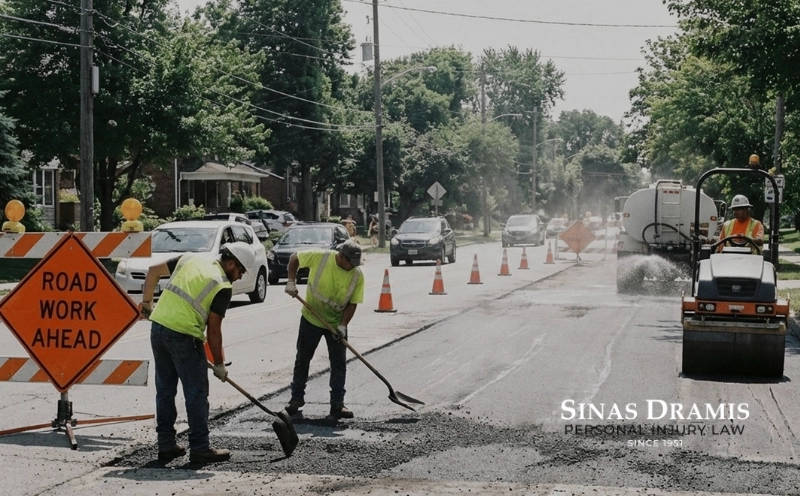
When a crash happens in a construction or work zone, most people assume liability rests entirely with the drivers involved. While driver behavior often plays a role, construction zone accidents raise a more complicated – and frequently overlooked – question:
Can road construction contractors be held legally responsible for accidents in Michigan work zones?
In many cases, the answer is yes.
Road contractors have specific legal duties related to how work zones are designed, marked, and maintained. When those duties are breached and contribute to a crash, contractors may share – or even bear primary – responsibility for the injuries that result.
Understanding when contractor liability applies and how it is proven is essential for injured victims navigating Michigan construction zone accident claims.
Short answer:
Yes. In Michigan, road construction contractors may be held liable for work zone accidents when unsafe signage, poor traffic control, inadequate lighting, debris, or other construction‑related hazards contribute to a crash. Liability depends on whether the contractor failed to meet required safety standards.
Why Contractor Liability Matters in Work Zone Accidents
Construction zones fundamentally alter the way roads function. Lanes shift, travel paths narrow, visibility decreases, and drivers are forced to make rapid decisions in unfamiliar conditions.
Because these risks are predictable, Michigan law imposes heightened safety responsibilities on the parties that create and control work zones. When contractors fail to follow required safety standards, they may be held accountable for resulting injuries – even if a driver also made a mistake.
This shared‑responsibility framework is what makes construction zone cases different from standard traffic accidents.
For a broader overview of all parties who may be responsible, see: Construction Zone Accidents in Michigan: Who Is Responsible?
The Legal Duties of Road Construction Contractors in Michigan
Road construction contractors are not simply hired labor. They are entrusted with designing and operating safe work zones.
Their duties often include:
- Developing traffic control plans
- Installing and maintaining proper signage
- Marking lane closures and shifts clearly
- Managing debris and construction materials
- Providing adequate lighting for nighttime work
- Adjusting safety measures as conditions change
Failing to meet these obligations can expose contractors to liability when crashes occur.
Common Situations Where Contractors May Be Liable
Contractor liability often arises when unsafe construction conditions contribute directly to an accident.
Inadequate or Confusing Signage
Drivers rely heavily on signage in work zones. Contractors may be responsible when they fail to:
- Provide advance warning of lane closures
- Clearly mark lane merges or detours
- Remove outdated or contradictory signs
- Ensure signs are visible day and night
Confusing signage can leave drivers without sufficient time to react safely, especially at highway speeds.
Improper Lane Design or Traffic Control
Contractors may also be liable when traffic patterns are altered in unsafe ways, including:
- Sudden lane shifts without warning
- Inadequate buffer zones
- Poorly marked temporary lanes
- Unsafe merging areas
Temporary traffic control must still meet recognized safety standards – even though it is not permanent.
Unsafe Roadway Conditions
Construction activity often creates physical hazards that can cause loss of vehicle control, such as:
- Uneven pavement or abrupt drop‑offs
- Loose gravel or debris in travel lanes
- Construction equipment near active traffic
- Poorly secured barriers or cones
Leaving these hazards unaddressed may expose contractors to liability when crashes occur.
Poor Visibility and Nighttime Conditions
Many Michigan road projects operate overnight. Contractors must ensure that work zones remain visible and safe after dark.
Liability can arise when contractors fail to provide:
- Adequate lighting
- Reflective barriers and markings
- Clearly visible signage
Nighttime work zone accidents frequently involve severe injuries due to delayed recognition of hazards.
How Contractor Liability Differs From Driver Liability
In many work zone accidents, more than one party shares fault.
For example:
- A driver may be speeding or distracted
- A contractor may have failed to post proper warnings
Michigan law allows injured victims to pursue claims against every party whose negligence contributed to the crash. Responsibility does not have to be exclusive – it can be shared.
This layered liability analysis is a hallmark of construction zone accident cases.
Governmental Entities vs. Private Contractors
Some construction projects are performed directly by government agencies, while others are handled by private contractors.
This distinction matters because:
- Government entities may have immunity protections
- Private contractors generally do not
In many cases:
- The government designs or oversees the project
- A private contractor controls the work zone
Determining who controlled safety decisions is often critical to assigning liability.
How Michigan No‑Fault Insurance Applies
As with other car accidents, Michigan’s no‑fault insurance system applies to construction zone crashes. Injured victims may receive:
- Medical expense coverage
- Wage loss benefits
- Replacement services
However, no‑fault benefits do not cover pain and suffering or long‑term quality‑of‑life losses.
When injuries rise to the level of a serious impairment of body function, additional claims may be available.
Construction Zone Accidents Involving Commercial Trucks
Work zones are especially dangerous for large trucks. Narrow lanes and sudden traffic shifts increase the risk of severe truck‑related crashes.
When trucks are involved, liability may extend to:
- The truck driver
- The trucking company
- The road contractor
These cases often require detailed investigation to determine overlapping responsibility.
Evidence That Matters in Contractor Liability Cases
Proving contractor liability requires different evidence than typical traffic crashes.
Critical evidence may include:
- Traffic control plans
- Construction contracts
- Photos or video of work zone conditions
- Maintenance and inspection records
- Incident logs showing prior accidents
- Witness statements
- Expert analysis of safety standards
Because work zones change frequently, early documentation is essential.
Common Defenses Raised by Contractors and Insurers
Construction contractors and their insurers often argue that:
- The work zone met all safety requirements
- Signage was adequate
- The injured driver failed to obey warnings
- The crash would have occurred regardless of construction conditions
Evaluating these defenses often requires technical review of work zone standards and practices.
What To Do After a Work Zone Accident in Michigan
If you are injured in a construction zone accident:
- Seek medical attention immediately
- Ensure a police report is filed
- Photograph signs, barriers, and roadway conditions
- Identify witnesses and workers present
- Preserve dashcam or phone footage
- Avoid recorded statements without guidance
Early action often determines whether contractor liability can be established.
Frequently Asked Questions
Q. Can a construction company be sued for an accident?
A. Yes. Contractors may be held liable when unsafe work zone conditions contribute to a crash.
Q. Is the driver always responsible in a work zone accident?
A. No. Responsibility may be shared among drivers, contractors, and road authorities.
Q. Do no fault benefits still apply?
A. Yes, but they do not eliminate claims when injuries are serious.
Speak With a Michigan Work Zone Accident Lawyer
Work zone accidents raise complex questions about safety standards, contractor duties, and shared liability. Determining whether a contractor may be responsible requires investigation beyond the drivers involved.
If you were injured in a Michigan construction or work zone accident, a legal review can help determine who may be responsible and whether compensation beyond no fault benefits may be available.