
Facebook

Instagram

LinkedIn

YouTube

Celebrating Mike Larkin’s Retirement

Portrait of attorney Mike Larkin featured in a Sinas Dramis Law Firm retirement and recognition announcement

Honoring an extraordinary career, quiet leadership, and the lasting difference Mike made for clients, colleagues, and friends at the firm. On June 1, 2026, Michael (“Mike”) E. Larkin retired from the Sinas Dramis Law Firm, bringing to a close a remarkable legal career defined by exceptional advocacy, professionalism, and a deep commitment to helping others. Mike was born and raised in Tucson, Arizona. He earned his undergraduate degree in Government and International Relations from the University of Notre Dame in 1979 and received his law degree from the University of Arizona Law School in 1982. He began his legal career with Haralson,...

Continue reading

Grand Rapids Car Accident Claims: Deadlines Injured Victims Need to Know

Highway traffic in Grand Rapids representing car accident claim filing deadlines in Michigan.

In Grand Rapids, most car accident lawsuits must be filed within three years of the crash, but no‑fault benefit claims, uninsured motorist claims, and claims involving government entities often have much shorter deadlines. Missing these deadlines can permanently bar recovery. After a car accident in Grand Rapids, most injured people focus on medical treatment, insurance calls, and getting life back on track. Legal deadlines often feel distant or unimportant - until it’s too late. Unfortunately, Michigan law imposes strict filing deadlines on car accident claims, and missing even one can permanently eliminate the right to recover compensation. These deadlines apply regardless of...

Continue reading

How Long Do You Have to File a Car Accident Claim in Michigan?

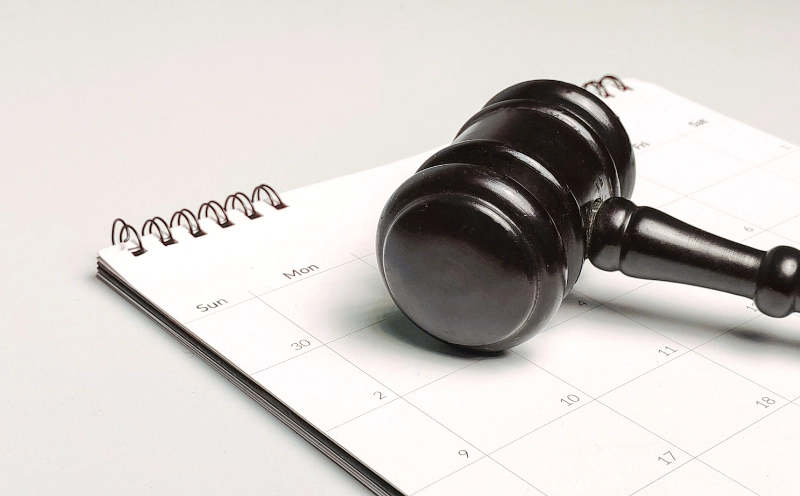
Judge’s gavel on a calendar representing filing deadlines for Michigan car accident claims.

In Michigan, most car accident lawsuits must be filed within three years of the date of the accident. However, no‑fault claims, claims against governmental entities, and uninsured motorist claims may have much shorter deadlines. After a car accident, many injured people understandably focus on medical treatment and recovery. Legal deadlines are often the last thing on their minds. Unfortunately, Michigan law imposes strict time limits on car accident claims, and missing a deadline can permanently eliminate the right to recover compensation. Knowing how long you have to file a car accident claim in Michigan - and which deadlines apply to which types...

Continue reading

Uninsured and Hit‑and‑Run Accidents in Lansing: What Injured Drivers Need to Know

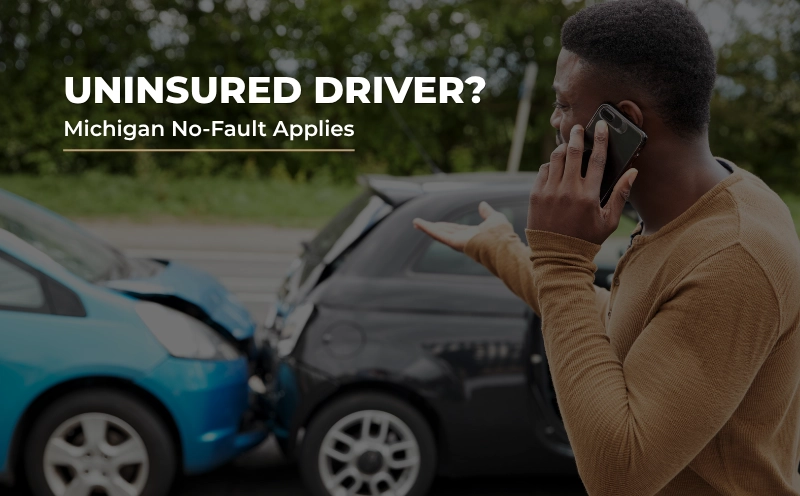
Car accident in Lansing involving an uninsured or hit and run driver, showing that Michigan No-Fault insurance still applies

In Lansing, if you are injured by an uninsured or hit‑and‑run driver, your own no‑fault insurance still applies for medical and wage‑loss benefits. Additional compensation may be available through uninsured or underinsured motorist coverage, particularly when injuries are serious. Car accidents involving uninsured or hit‑and‑run drivers are an unfortunate reality on Lansing roads. Between heavy commuter traffic, frequent construction, and late‑night driving near Michigan State University, crashes involving drivers who lack insurance - or flee the scene - happen more often than many people expect. When the at‑fault driver has no insurance, injured victims are often left asking difficult questions: Who pays...

Continue reading

What If the At‑Fault Driver Has No Insurance in Michigan?

Car accident involving an uninsured driver in Michigan, with explanation that No-Fault insurance still applies

If the at‑fault driver has no insurance in Michigan, your own no‑fault insurance still applies for medical and wage‑loss benefits. Additional compensation may be available through uninsured or underinsured motorist coverage if your policy includes it, particularly when injuries are serious. After a car accident, many injured drivers assume the at‑fault driver’s insurance company will pay for medical bills, lost wages, and other damages. In Michigan, however, a surprising number of crashes involve drivers with no insurance or not enough insurance to fully cover the harm they cause. When the at‑fault driver is uninsured - or underinsured - injured victims are often...

Continue reading

Should You Give a Recorded Statement After a Michigan Car Accident?

Person reviewing accident documents while speaking on phone about a Michigan car accident insurance statement

In Michigan, you are generally required to cooperate with your own insurance company, which may include providing a recorded statement, but you are not required to give a recorded statement to the other driver’s insurance company. Statements given too early can be used to dispute injury severity or fault. After a car accident in Michigan, it is common for an insurance adjuster to reach out quickly - sometimes within hours or days - and request a recorded statement. The request is often framed as routine or helpful, and injured people are frequently told that giving a statement will “speed things up”...

Continue reading

Common Insurance Tactics Used to Reduce Michigan Injury Claims

Insurance representative reviewing claim paperwork related to reducing a Michigan injury claim

Insurance companies often reduce Michigan injury claims by disputing injury severity, challenging causation, requesting early recorded statements, shifting fault to the injured driver, and minimizing whether injuries qualify as serious under Michigan law. Recognizing these tactics helps injured people avoid mistakes that can limit compensation. After a car accident in Michigan, injured people often assume that insurance companies exist to fairly evaluate claims and provide compensation when injuries are serious. In practice, insurance companies are businesses whose primary goal is to limit financial exposure whenever possible. For accident victims, understanding how insurance companies evaluate and defend injury claims is just as important...

Continue reading

How to Prove “Serious Impairment of Body Function” in Michigan (and Why Insurers Dispute It)

Reviewing injury claim documents to prove serious impairment of body function in a Michigan insurance case

To prove “serious impairment of body function” in Michigan, you must show (1) an objectively manifested impairment, (2) of an important body function, that (3) affects your general ability to lead your normal life. Strong proof usually includes medical documentation and testing, records of functional limitations, and clear before‑and‑after life impact evidence - because insurers often dispute seriousness, causation, or “normal life” impact. After a Michigan car accident, you may hear the term “serious impairment of body function” and wonder what it means for your case. Under Michigan’s No‑Fault law, this threshold often determines whether an injured person can pursue pain...

Continue reading

Work Zone Accidents in Michigan: Are Road Contractors Ever Liable?

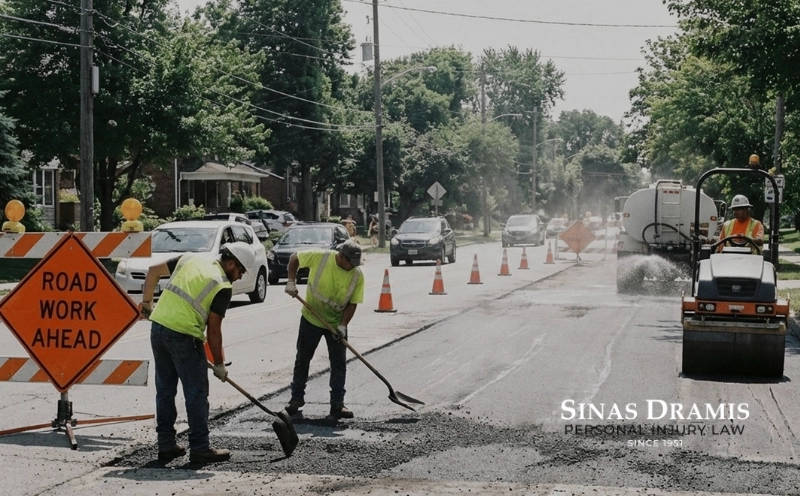
Road construction crew working in a Michigan work zone with traffic and cones, illustrating potential contractor liability

When a crash happens in a construction or work zone, most people assume liability rests entirely with the drivers involved. While driver behavior often plays a role, construction zone accidents raise a more complicated - and frequently overlooked - question: Can road construction contractors be held legally responsible for accidents in Michigan work zones? In many cases, the answer is yes. Road contractors have specific legal duties related to how work zones are designed, marked, and maintained. When those duties are breached and contribute to a crash, contractors may share - or even bear primary - responsibility for the injuries that result. Understanding when...

Continue reading

Who Can Be Held Liable in a Michigan Semi‑Truck Accident?

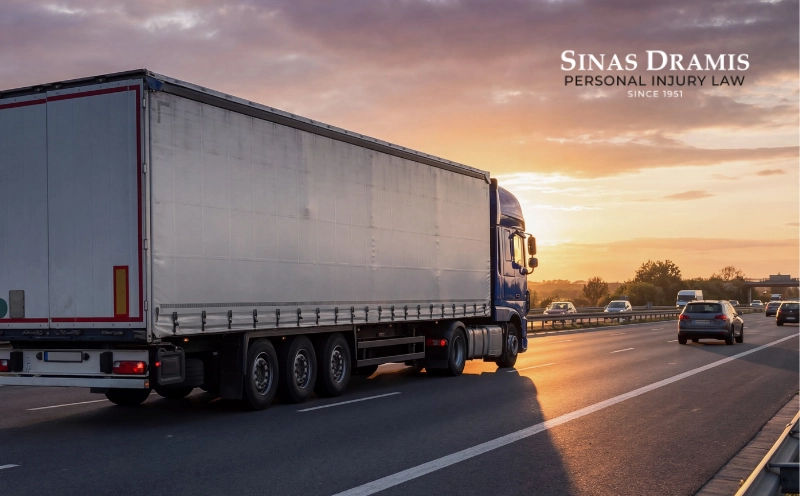
Semi truck traveling on Michigan highway, representing liability factors in truck accident cases

In a Michigan semi‑truck accident, liability may extend beyond the truck driver to include the trucking company, cargo loaders, maintenance contractors, or vehicle manufacturers. Michigan law allows injured victims to pursue claims against all parties whose negligence contributed to the crash. When a semi-truck accident happens, determining who is legally responsible is not always straightforward. Unlike a typical car crash, multiple parties may be involved - from the truck driver to the trucking company, a maintenance provider, or even a third-party contractor. Each of these parties may play a role in how the crash occurred and who ultimately bears legal responsibility. Understanding...

Continue reading